

A renowned Houston criminal trespass attorney from Napier Law Firm provides legal representation to anyone with a pending criminal trespass case. If you’ve been charged with a crime considered criminal trespass, speak with an experienced Houston trespass attorney right away to understand more about trespass law in Harris County.
Understanding Trespassing Laws in Houston, TX
What Is the Law for Trespassing in Texas?
Under Texas Penal Code §30.05, criminal trespass means entering or remaining on or in another person’s property without effective consent when the person had notice that entry was forbidden, or received notice to leave and did not leave. For this offense, entry means intrusion of the entire body. A posted sign is not the only way to give notice.
What Is the Trespassing Law in Harris County Texas?
Fort Bend County and Harris County criminal trespassing laws emphasize using identifying purple paint marks with traditional written communication as proper notice to exclude intruders. Houston homeowners need to understand the intricacies of property law and what trespassing may look like.
Criminal Trespassing Penalties
Class B is the default. The ordinary punishment is up to 180 days in jail, a fine of up to $2,000, or both.
Class C can apply in two particular locations. The offense must occur on agricultural land within 100 feet of its boundary or on residential land within 100 feet of a protected freshwater area, subject to the other grading rules. The ordinary maximum fine is $500. It matters where the alleged offense happened, not where an arrest took place.
Class A applies in specified circumstances. Examples include trespass in a habitation or shelter center, at a qualifying Superfund site or critical infrastructure facility, or at a general residential operation that operates as a residential treatment center. Carrying a deadly weapon during the offense can also make it Class A. The statute has a separate higher-education provision that requires a qualifying prior offense; a prior conviction does not automatically make any trespass Class A. The ordinary maximum is one year in jail, a $4,000 fine, or both.
The third-degree provision is narrow. It applies only when the State proves the trespass occurred in the course of the specific smuggling offense in §20.05(a)(2). The ordinary punishment for third-degree trespass is two to ten years in prison and a possible fine of up to $10,000. Being armed or intending to commit another crime does not, by itself, establish that felony grade under §30.05.
Weapon-only restrictions have a separate rule. When entry with a firearm or other weapon was the sole basis for forbidding entry, §30.05(d-3) generally provides for Class C with a maximum $200 fine. Class A requires proof of the specified post-entry personal notice and failure to leave.
A skilled Houston criminal defense attorney can use the following strategies for your trespass defense:
- Leveraging exigent circumstances in your case
- Challenging the prosecution’s case regarding proper notice
- Questioning the accused’s knowledge that entry is forbidden
- Determining the apparent authority of the person issuing oral or written communication
If you are facing criminal trespass charges an experienced criminal defense attorney can negotiate and litigate on your behalf to get the best outcome.
Protecting Property Owners’ Rights and Minimizing Trespassing Incidents
Texas laws state that lawful landowners can use force to protect their property but as a last resort. The property owner is justified in using force when they believe it is immediately necessary to prevent or terminate trespass or unlawful interference with their property. The “castle doctrine” in Texas gives property owners the right to protect their domain, even using force if necessary.
Trespassing can be a civil or criminal offense, depending on the severity. Property owners can use the following methods to prevent trespassing on their property and protect themselves from trespass claims:
- Marked boundaries with purple paint
- Security cameras
- Security personnel
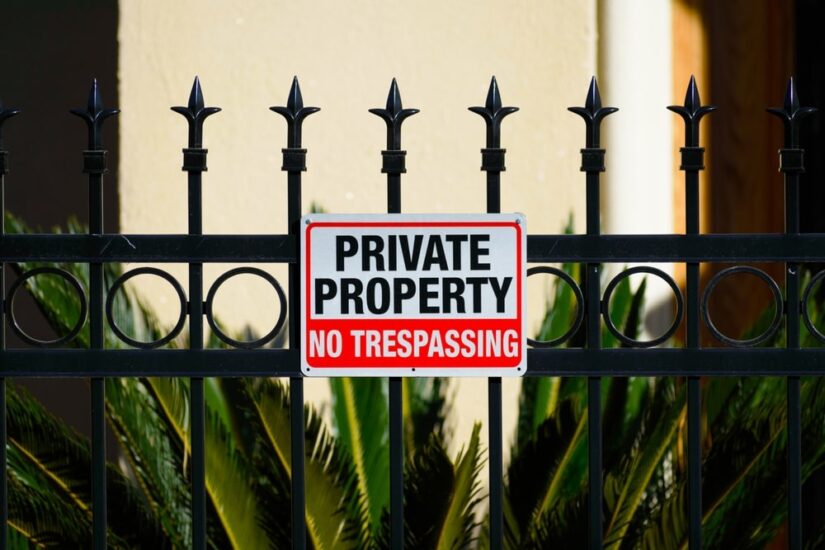
- No trespassing signs
- Keep property well-maintained
Being proactive can prevent trespassing on your private property and protect your land to help avoid legal issues in the future. If you have further questions about your legal defense and criminal charges, sit down with a skilled lawyer from Napier Law Firm.
FAQs about Trespassing In Houston
What Is the Law for Trespassing in Texas?
Under Texas Penal Code §30.05, criminal trespass means entering or remaining on or in another person’s property without effective consent when the person had notice that entry was forbidden, or received notice to leave and did not leave. For this offense, entry means intrusion of the entire body. A posted sign is not the only way to give notice.
How Long Does a Trespass Last in Texas?
A trespassing charge can remain on your criminal record indefinitely. This can affect your future opportunities. If you want a lawful discharge of your trespassing case, speak with an experienced trespass legal defense strategy specialist during a consultation.
What Is the Trespassing Law in Harris County, Texas?
Harris County follows Texas law but the main difference is that the county emphasizes using proper notice like warning signs, purple paint marks, or oral or written communication to prevent trespassing.
How Do I File a No Trespass Order in Texas?
Filing a no-trespass order involves ensuring that proper notice is given and documented, typically through written communication or official legal filings.
Seeking Legal Advice and Consultation in Trespassing Cases
Trespassers don’t just face legal consequences, they can be held liable in civil court for damages caused during their intrusion. This often includes property damage and personal injuries.
Navigating the legal process of trespassing cases involves reporting the incident to investigate the circumstances. If necessary, it may require legal action, however, the trespass conviction process seeks to protect the rights of both property owners and lawful visitors.
Negotiations, Settlements, and Courtroom Representation in Texas Trespassing Cases
Napier Law Firm provides exceptional legal guidance to those charged with criminal trespass. Using knowledge of Texas law, trespassing offenses on private property, and agricultural land, our firm protects your rights using tailor-made strategic defense tactics. If you need advice on filing a no-trespass order in Texas or have been charged with trespassing in Montgomery County, our team is equipped with the legal proficiency to secure a successful outcome.
To explore the broad spectrum of legal services offered by The Napier Law Firm, including representation in criminal defense cases, or to schedule a complimentary consultation, please do not hesitate to contact our team. For more information on how our Houston criminal defense lawyers can assist you, visit our dedicated page on criminal defense law.