June 26, 2025
Written and reviewed by George Napier, Founding Attorney at The Napier Law Firm, former Montgomery County Assistant District Attorney and Felony Chief Prosecutor.
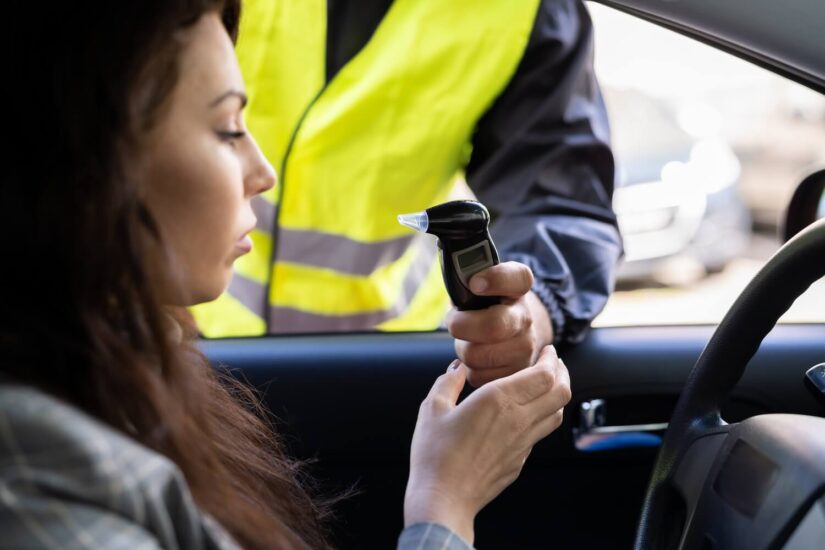
It is one of the most stressful moments any driver can experience: red and blue lights flashing in the rearview mirror, the slow drive to the side of the road, and the officer leaning in with that familiar question: “Have you had anything to drink tonight?”
For many Texans, what happens next can define the outcome of their entire case. The officer might ask you to take a breath test to measure your blood alcohol concentration (BAC). And that leads to a question that countless people have asked: Can you refuse a breathalyzer in Texas?
The answer is not as simple as “yes” or “no.” You technically have the right to refuse, but that decision carries serious legal consequences. If you or a loved one has been charged with drunk driving, you should seek legal help from our dedicated Texas DWI lawyers at the Napier Law Firm as soon as possible.
Texas’s “Implied Consent” Law
Texas operates under what is known as implied consent. This means that by driving on Texas roads, you have already given consent to submit to a chemical test (either a breath or blood test) if you are lawfully arrested for driving while intoxicated (DWI).
However, this does not mean you are forced to take a test on the spot. You can still say no. But when you do, it triggers immediate administrative penalties that can complicate your situation, even before any criminal charges are filed.
If you refuse a breath test in Texas, your driver’s license can be automatically suspended for a set period of time. That suspension is handled through the Texas Department of Public Safety (DPS), not the criminal court system.
The idea behind the law is simple: to discourage refusal and encourage cooperation. Yet, many people decline the test, either because they are unsure of their rights or because they do not trust the accuracy of the device.
What Happens When You Refuse a Breathalyzer in Texas?
When an officer suspects you of intoxicated driving and you decline to take a breath test, they are required to inform you of the legal consequences. They must read a standard form that explains:
- Your license will be suspended for 180 days if this is your first refusal.
- If you have refused before, the suspension period increases to two years.
- Refusal can also be used as evidence against you in court, implying guilt.
Once you refuse, the officer will confiscate your license and issue a temporary driving permit valid for 40 days. During that period, you have the right to request an Administrative License Revocation (ALR) hearing to challenge the suspension.
If you do not request that hearing within 15 days, the suspension automatically goes into effect when the temporary permit expires.
Can the Police Force You to Take the Test in Texas?
In most cases, officers cannot physically force you to take a breath test. However, there are exceptions. Texas law allows for mandatory testing in specific circumstances, such as when the crash involves serious bodily injury, death, or a prior DWI conviction.
In those cases, law enforcement may obtain a search warrant from a judge to conduct a blood draw, even if you initially refuse. Breath tests, on the other hand, are typically voluntary unless a warrant authorizes them.
This balance between individual rights and public safety is part of what makes Texas breathalyzer refusal such a legally complex issue.
Why Some People Refuse
There are strategic reasons someone might decide to decline a test. For example:
- Distrust of technology: Breathalyzers are not foolproof and can produce inaccurate results due to calibration issues, improper administration, or medical conditions.
- Concern over evidence: Refusing a test limits the evidence available to the prosecution, which might make the case harder to prove.
- Uncertainty and fear: In the heat of the moment, many drivers simply do not know what the right decision is.
However, the downside is that refusal can look bad to a jury. Prosecutors may argue that a refusal implies guilt, suggesting you declined because you knew you were intoxicated.
What Happens at the ALR Hearing in Texas
If you refuse a test, the first battle you face is administrative, not criminal. The ALR hearing is your opportunity to fight the automatic license suspension.
At that hearing, your attorney can cross-examine the arresting officer and review evidence related to the stop, detention, and refusal. Sometimes, these hearings reveal procedural mistakes like a lack of probable cause for the traffic stop or improper administration of the request for testing that can lead to reinstatement of your license.
Even better, the testimony from that hearing can later help your defense in criminal court.
Building a DUI Breathalyzer Defense in Texas
If your case proceeds to court, your attorney’s goal is to challenge every step of the state’s case against you. A skilled attorney will know what besides alcohol can set off a breathalyzer. Their DUI breathalyzer defense Texas strategy may involve:
- Questioning the legality of the stop: Was there a valid reason to pull you over in the first place?
- Reviewing the arrest process: Did the officer have probable cause for the arrest, and were you properly informed of your rights?
- Scrutinizing test procedures: If you eventually consented to a test, was it administered correctly and with a properly calibrated device?
- Exploring alternative explanations: Were there medical or environmental factors that could explain your appearance or behavior?
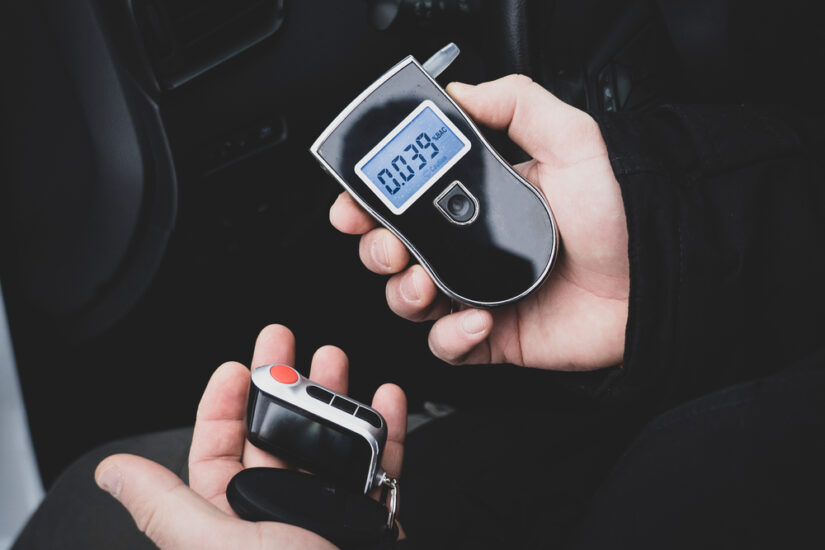
Notably, when it comes to the question of breathalyzer vs. blood test accuracy, blood tests are considered far more accurate. These defenses can be highly effective, particularly when combined with strong evidence and expert testimony about the unreliability of breath testing technology.
Refusing Versus Taking the Test: Which Is Better?
There is no universal answer. Refusing a test might protect you from providing direct evidence of intoxication, but it comes with the penalty of license suspension and the potential for that refusal to be used against you.
Taking the test can make your case more difficult if your BAC is above the legal limit, but it may also help show that you were below it or close to the threshold.
The best course of action often depends on the circumstances, your prior record, and how the stop occurred. That is why it is so important to consult an experienced defense attorney as soon as possible after a DWI arrest.
What If You Already Refused?
A refusal does not automatically mean conviction. You still have legal options. Requesting an ALR hearing immediately is essential to preserve your driving privileges.
Even if your license is suspended, your attorney can help you apply for an occupational driver’s license, which allows limited driving for work, school, or family obligations.
More importantly, A strong defense can still challenge the arrest’s legality, the officer’s observations, and any field sobriety testing procedures.
Legal Help is Here from Our Experienced Texas DWI Lawyer
At the Napier Law Firm, we bring decades of combined experience and a deep understanding of Texas DWI law to every case we handle. George Napier is a distinguished attorney and a persistent advocate for his clients, known for his sharp courtroom skills and dedication to individualized representation.
George’s extensive background includes a significant tenure as an Assistant District Attorney and Chief Prosecutor in Montgomery County. That experience gives him an insider’s understanding of how prosecutors think and how to dismantle their arguments in court. We take pride in providing aggressive advocacy, and will fight tooth and nail to achieve the best possible outcome in your case. To schedule your free consultation, call us 24/7 at (713) 470-4097 or contact us online.
Charged With a DWI in Texas? Get Help Now
The penalties for a Texas DWI follow you for years — license suspension, insurance hikes, and a permanent record. The Napier Law Firm has helped clients beat DWI charges in Conroe, Houston, and across South Texas. Learn how we approach Texas DWI defense and how Houston DWI cases differ from Conroe DWI cases. Don’t wait — request a free consultation 24/7.
Contact The Napier Law Firm today for a free consultation. Call us at (713) 470-4097 or fill out our online form. We serve clients throughout Houston, The Woodlands, Conroe, and surrounding areas in Harris, Montgomery, and Fort Bend counties.